
Filming Slow River
I had the opportunity to film on private land in early January of this year. I’d been in the middle of post-production for “Let Me Rest” and did cinematography and videography for projects throughout last year. I had the itch to make something, especially with the access to the land I had. Two years passed since I last directed a film. I set this challenge to write something that had no dialogue, something I’ve never done before, and to keep the production tight using the time management skills I developed working professionally and full-time in this space for the last few years.
This was going to be a “passion project” of sorts. I had an extremely limited budget and wanted to keep the crew as small as possible to maintain the short window I was setting for myself. Casting was simple. I worked as a cinematographer on a pilot that Rich Follett acted in the year before. He played a mad king with a brilliantly over-the-top quality. I had him in the back of my mind as I started writing the script over the holidays. I knew he could play the total opposite of the role. Acting that was subdued and layered with no dialogue. The problem was figuring out the right tone and story. I didn’t have personal experiences to pull from in the moment, so I dived into what I’ve been listening to and watching over the last year - true crime.
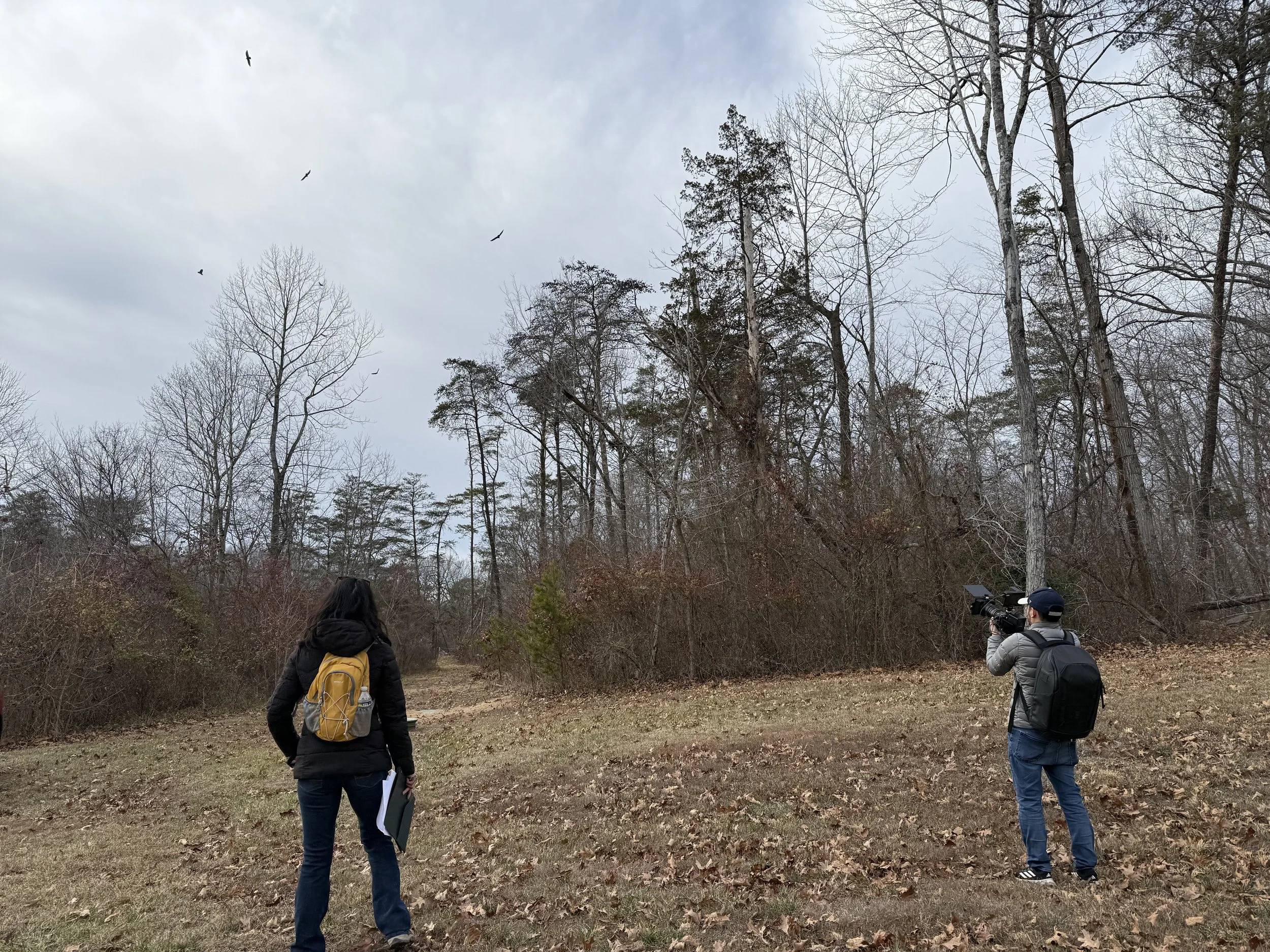
Filming b-roll of birds with the assistant director making sure we’re still on schedule.
Originally, the story was going to be much more visceral, but it quickly ballooned into something too complicated for the six-hour window I had been planning to film this project in. After a few revisions, it became clear that a story taking place years after an intense investigation for a missing child was the way to go. An old man, originally the former lead detective on the case, going out on his own to try and find some bit of closure for himself and the family involved, quickly became a story about a grandfather who had taken his grandchild out for a hike and lost him in the wilderness. The key was making both possibilities true for the viewer by leaving a lot of the backstory and reasoning behind the Old Man’s search ambiguous. Ultimately, I did leave a hint in the credits for what the story actually is, but if the credits were ignored, it could go in any direction the viewer wanted to take it in.
Once the script was finished and Rich accepted the role, I quickly filled the main crew roles needed for the project. I would be directing and performing the cinematography. To keep the crew size small and efficient, I only had a boom operator and an assistant director. I planned out all the shots in advance and the path for the character to take on the land I had access to. The climax of the story would take place along a small river.
Originally, the Old Man would drop to his knees in the river, crying out for anything, and the answer would present itself flowing down to him. But the sequence had to be changed on the spot. Since Rich had knee surgery a few years prior, he couldn’t kneel the way I had envisioned. This put the production in a weird spot for a couple of minutes. We had Rich sitting on a rock, but nothing was clicking. No matter how many angles I tried or how hard he was performing, we weren’t getting what we needed for the scene.
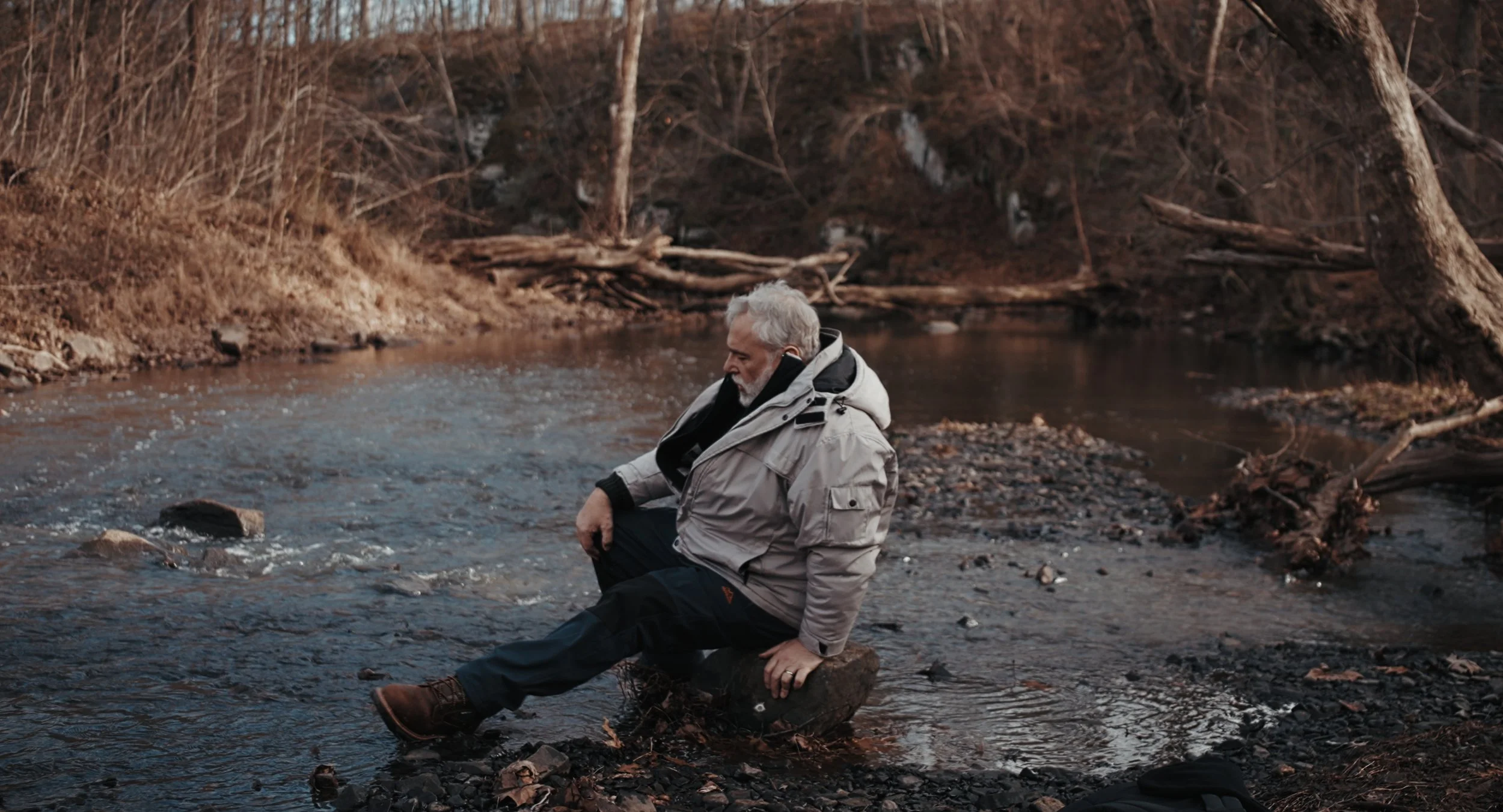
Rich Follett carefully setting himself up on the rock.
In between setups, though, Rich had accidentally fallen into the water while trying to stand himself up from the rock he had been sitting on. The crew and I rushed over to help him, but he insisted on getting up on his own. We both looked at each other and I could see a spark in his eyes. I asked him if I could film this moment. It felt wrong. But he absolutely wanted to do this. We were riding that line between insanity and creativity. We filmed his efforts in one take. It was beautifully performed and haunting to witness. We all felt a rush of excitement knowing that Rich was okay and that we managed to capture this moment. We had to film a pick-up of him falling in, however, to match where he ended up before standing.
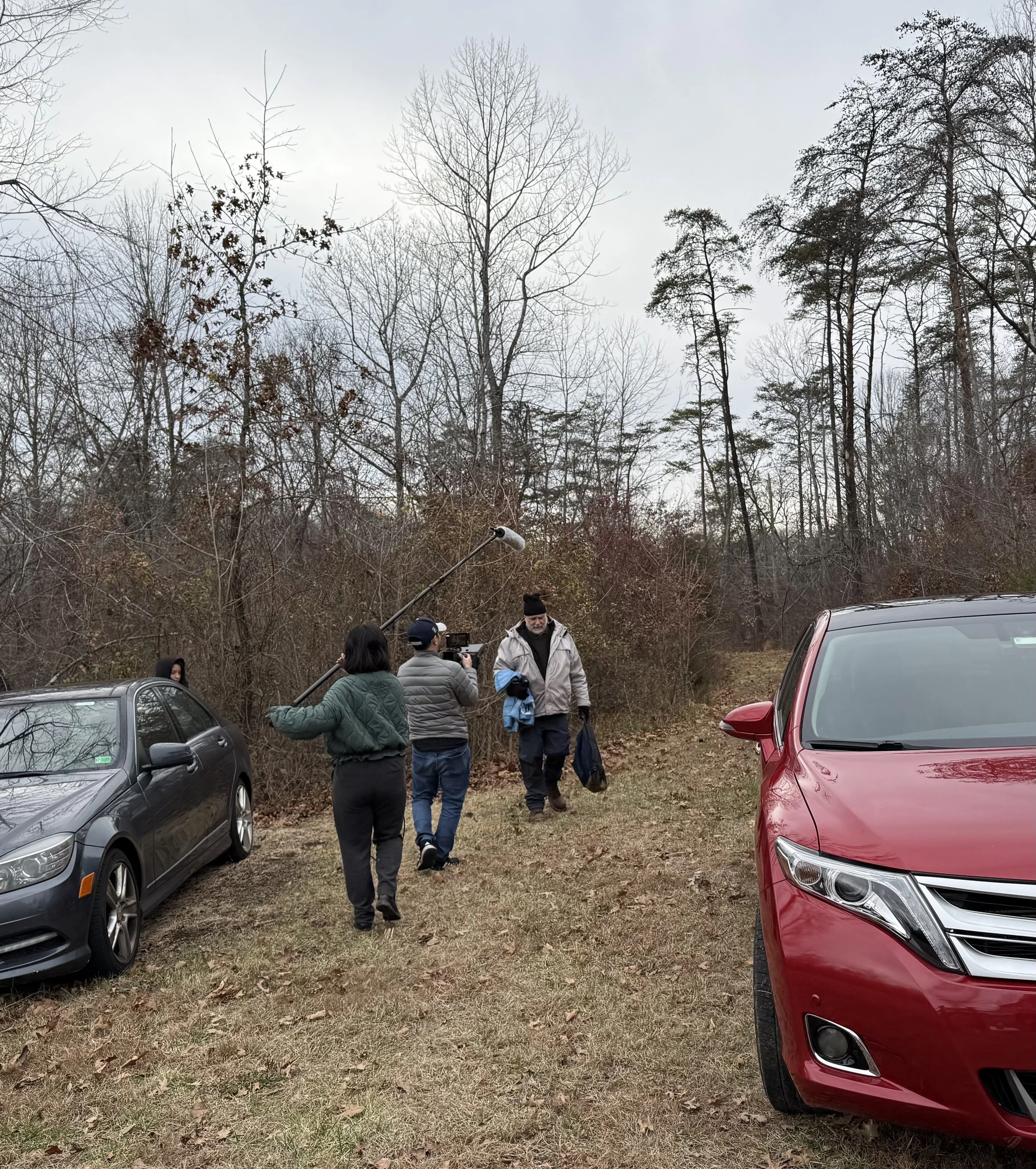
Using all the space we had access to at this one location. This area doubled as a trailhead.
Everything else was filmed as planned and in order, aside from the opening campfire scene. We finished the bulk of the shoot with an hour-long dinner break before moving to that scene and wrapping up the entire production. I had gone back to the river to film b-roll, wearing Rich’s waterproof boots so that I could stand right in the middle of it. One of the biggest takeaways from this project was embracing minimalism. We didn’t have a complicated story. We kept the production in one location and used all the major parts of it to our advantage. Most importantly, we let spontaneity take over when it made sense without it destroying the overall intention.
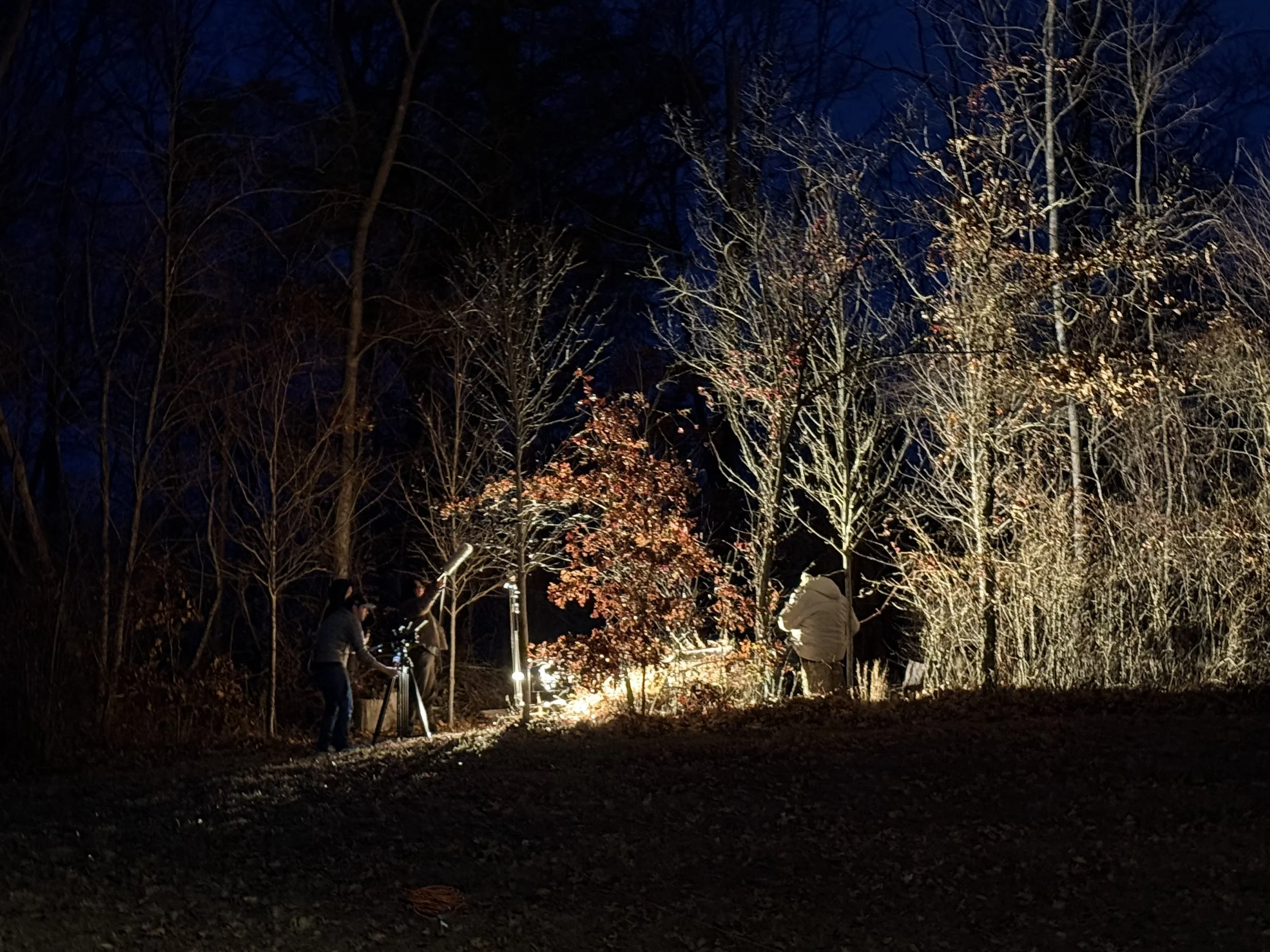
We filmed the rest of the short during the day and waited for nightfall to avoid filming day-for-night for this opening scene. This area of the location doubled as a meadow the character found to set up camp for the night. It’s a few steps to the right of our “trailhead.”
Too often filmmakers, especially in the micro/no-budget space, tend to overextend themselves by making the film unnecessarily long, jumping to too many locations, or having the subject matter be too complicated. I treated this like a 48-Hour Film Project competition piece, at least in the filming part of it. We can have all the elaborate lighting and camera setups, but at the end of the day, you just need a microphone, a simple camera setup, and a true short story to capture. That’s it. So get out there and film something. Anything. Make it simple. And don’t waste your cast and crew’s time.